
Have you ever heard someone say, “The Bible is all I need,” when you try to suggest a good book? While this statement is true, it also creates a barrier and fosters isolation. Good books don’t distract from the truth of Scripture; they highlight it.
At Selah International Counseling Ministries, we affirm without hesitation the sufficiency of Scripture. God’s Word is inspired, authoritative, and entirely sufficient for faith, life, and godliness (2 Timothy 3:16–17). Yet affirming the sufficiency of Scripture does not mean that we are meant to grow alone. Throughout history, God has used gifted teachers, pastors, missionaries, and godly authors to help the body of Christ mature.
Whether we are experienced expositors or faithful church members, we all approach the Word of God as finite learners. In addition, we tend to filter Scripture through our personal biases, preferences, experiences, and culture. Our wise Creator knows us better than we know ourselves and redirects us toward humility:
“Give instruction to a wise man, and he will be still wiser; teach a righteous man, and he will increase in learning” Proverbs 9:9
Good books point out blind spots in our lives. They help us to think deeply, to evaluate the thoughts and motives of our hearts, and to dig deeper into Scripture.
So what are some of the barriers that keep us from reading good books? Why do we hesitate in this area of growth and spiritual development?
- We misunderstand the doctrine of the Sufficiency of Scripture.
Some resist reading books outside of Scripture from sincere devotion. “I don’t want man’s ideas” is a view that often comes from a desire to protect the priority of God’s Word. But we forget to take into consideration that even our own personal time in the Word is influenced by our beliefs, our experiences, and the voices we trust. This approach fosters loneliness and self-sufficiency rather than biblical discernment.
Ed Welch wrote:
We grow in wisdom not by standing alone with a Bible in isolation, but by standing together under Scripture, helping one another see what we are prone to miss.
Scripture never instructs believers to isolate themselves. We are urged to evaluate what we hear (read) and hold fast to that which is good.
“Prove all things; hold fast that which is good.” 1 Thessalonians 5:21
Charles Spurgeon, arguably one of the greatest preachers in history, spoke to this very bluntly: “The man who never reads will never be read… he who will not use the brains of others proves he has no brains of his own.” Though it may sting, this blunt truth applies to ministry leaders and every Christian who desires to grow. Refusing to learn from others is pride disguised as spirituality.
- We have a limited view of the process of sanctification.
Over thirty years ago, I heard Charlie Tremendous Jones speak about the importance of reading. He said,
“You will be the same person in twenty-five years as you are today except for the people you meet and the books you read.”
I have found that to be true. Through reading good books, we can experience the “iron sharpening iron” relationship with great men and women that can help us:
- Grow in understanding our own heart and others
- Apply Scripture to suffering, anxiety, temptation, and relationships
- Develop discernment rather than reacting emotionally and according to our own understanding
- Learn patience, compassion, and wisdom
In David Guzik’s commentary Enduring Word, we are reminded that Paul’s request in 2 Timothy 4:13 to bring “the parchments” speaks directly to disciplined reading. Parchments not only refers to the Scriptures but also other trustworthy writings of that day.
Reading allows Christians to learn alongside faithful believers who have walked with God through hardship, doubt, and obedience.
- We are influenced by our culture.
The current global culture has contributed greatly to the decline in reading good books: the increase of digital content, the demand for instant gratification, the decrease of literary skills, and the decline of the skill of sustained focus. AI-generated spiritual content is also rapidly growing and changing the way we interact with Scripture. Devotionals, sermons, and articles can now be produced in seconds. While helpful tools exist, there is a real danger of consuming spiritual content without spiritual formation.
Carey Nieuwhof offers a needed warning:
AI can help with research, but it can’t replace the work God wants to do in you before He works through you.
This applies to the Christian reading a daily devotional just as much as to the pastor preparing a sermon. Spiritual growth requires time, reflection, prayer, and interaction. The aim must not just be information but heart transformation.
“Let the wise hear and increase in learning” Proverbs 1:5
Good books do not replace Scripture—they drive us back to it.
Good books do not replace prayer—they strengthen it.
Good books do not replace the church—they help to nourish local bodies.
As you plan and set goals for a new year, how do you plan to “increase in learning’? What books will you read in 2026?
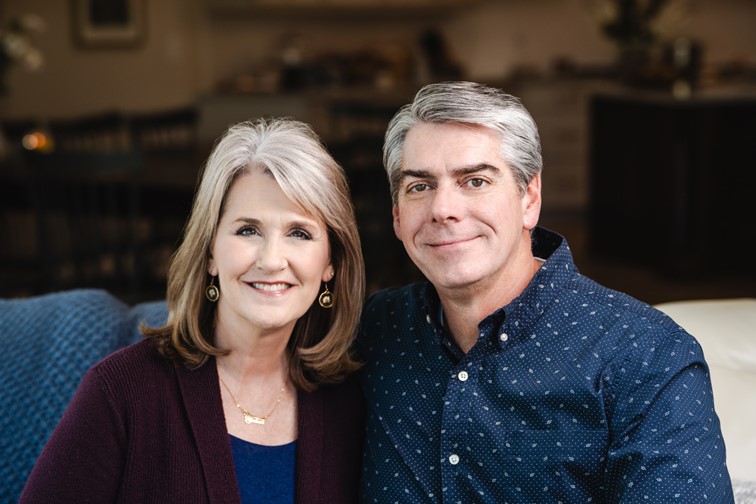
Chris Phillips
Chris and Dawn were married in 1989; they have been blessed with four children and seven grandchildren. Their journey in full-time Christian ministry has taken them from Georgia to South Carolina, Costa Rica, Cuba and the Dominican Republic. Through the ministry opportunities God has given them over the past thirty years, their passion has been to see souls saved, solid churches established, to encourage church leaders, see marriages restored, parent-teen relationships healed, child-rearing methods improved, and generations impacted by solid, biblical counseling of the fundamental truths of God’s Word. Chris and Dawn are graduates of Pensacola Christian College where Chris also received his MS in Education. Their passion for Biblical counseling led them to pursue certification through the Association of Certified Biblical Counselors (ACBC), and Chris is currently pursuing his Doctorate in Biblical Counseling. They are eagerly anticipating how God will use Selah International Counseling Ministries to make a difference in the lives of God’s servants and advance the Kingdom of Christ.
